Product Updates: May 31, 2026
Last updated: June 7, 2026

Improved Document Management
View, add, and remove documents associated with a specific entity across Loans, Clients, Funding Sources, Funding Entities, Equity, and Workflows-all in one place.
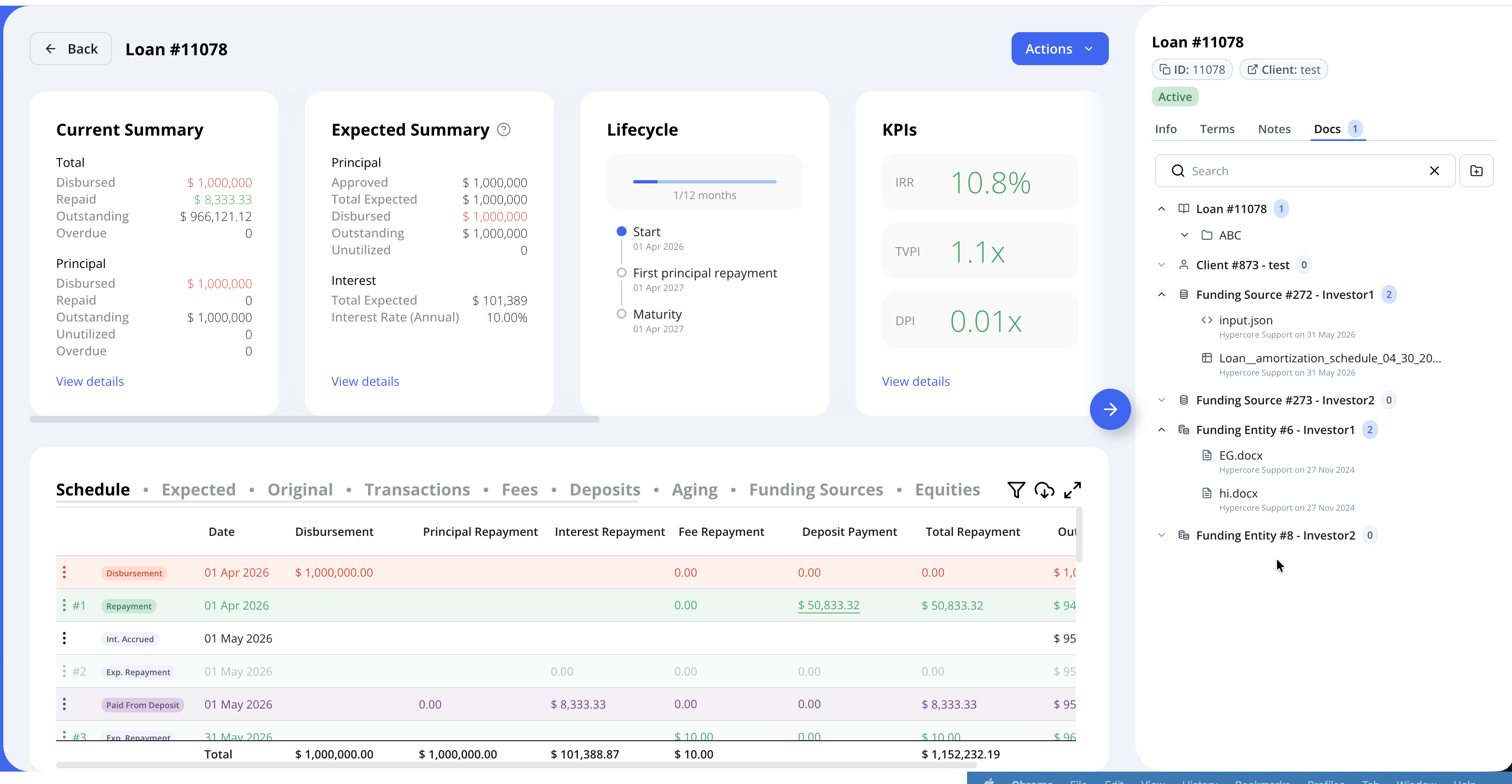
Functionalities include:
View and download individual documents
Drag and drop documents between entities
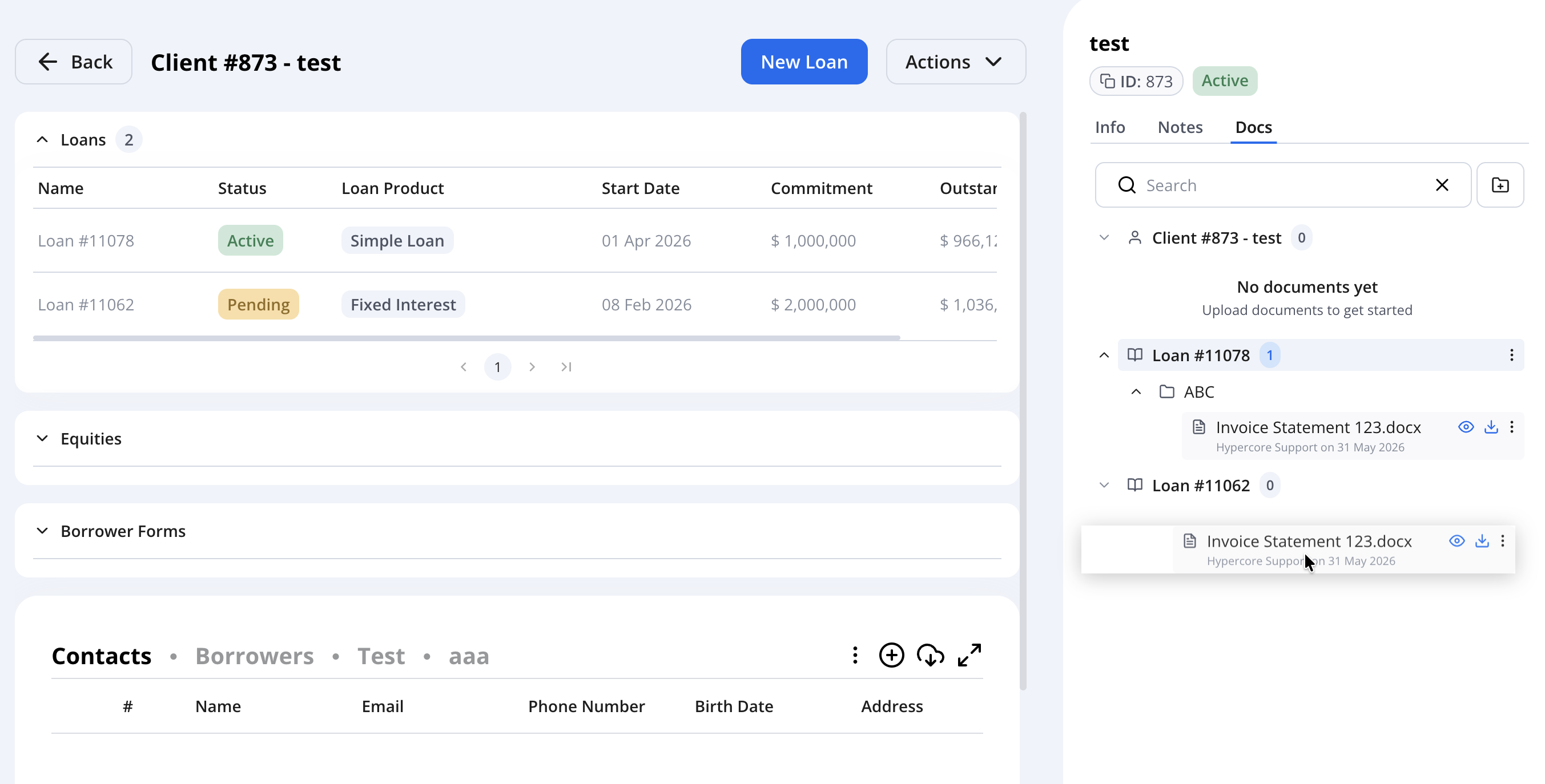
Search documents
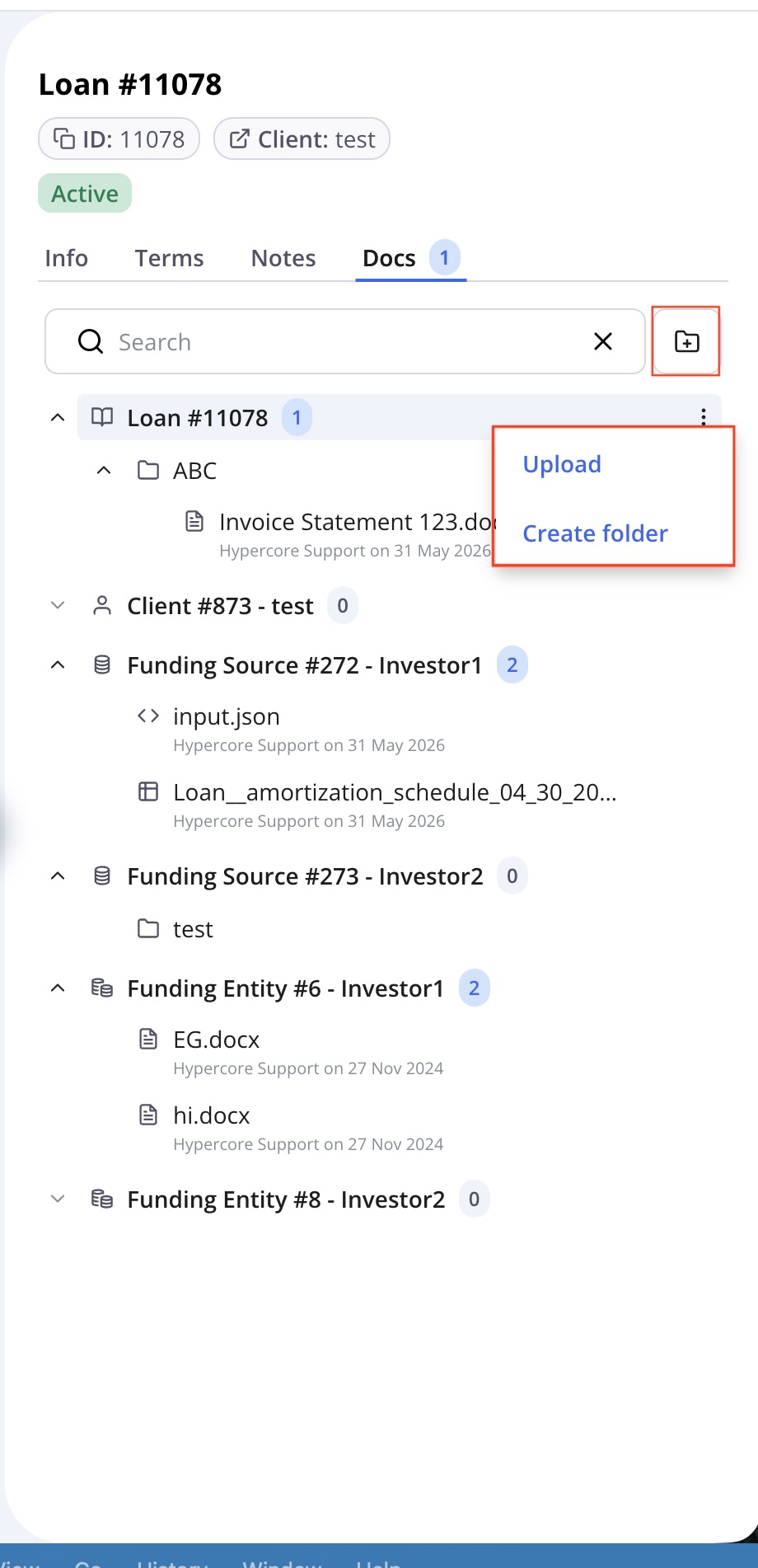
Create new folders per entity to organize your documents
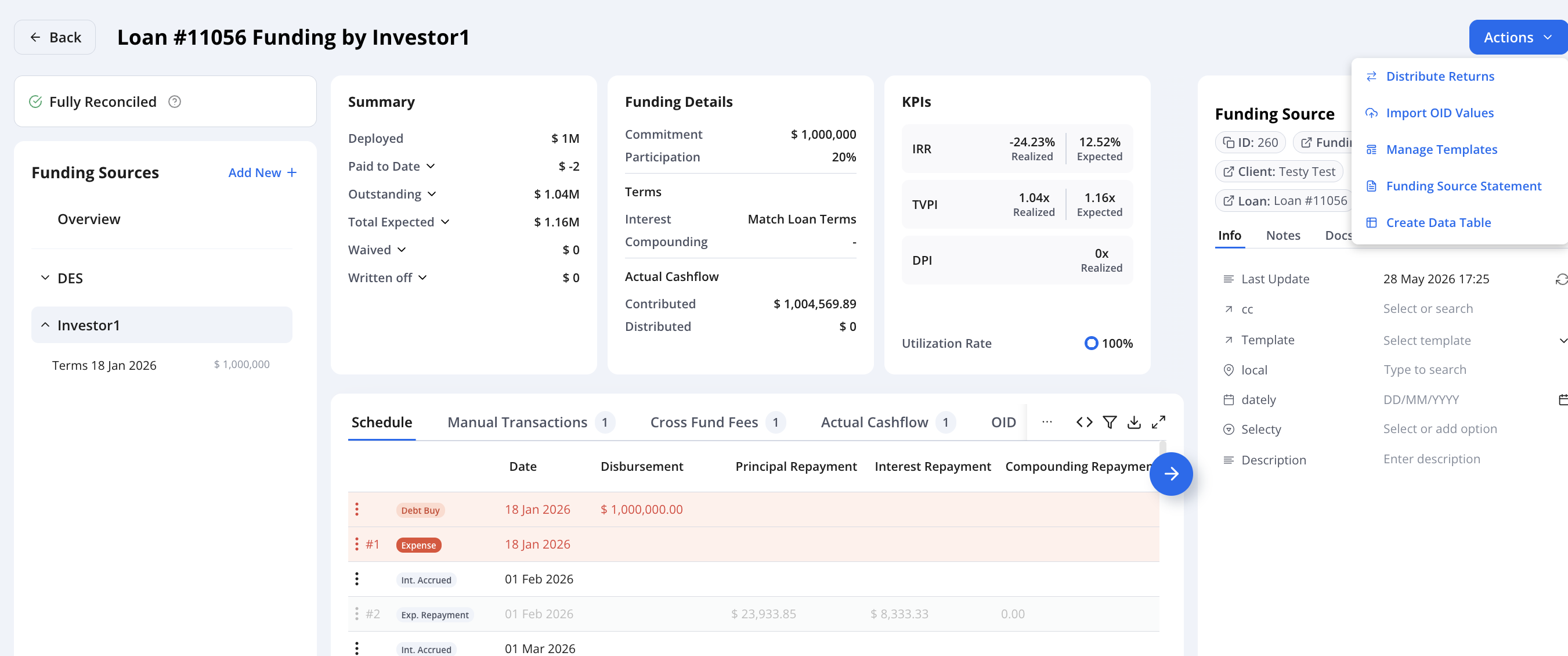
Download Statements from a Loan's Funding Details Page
You can now download Funding Source Statements directly from a loan's Funding Sources page.
From the Overview section, download statements for all funding sources associated with a loan in a single action.
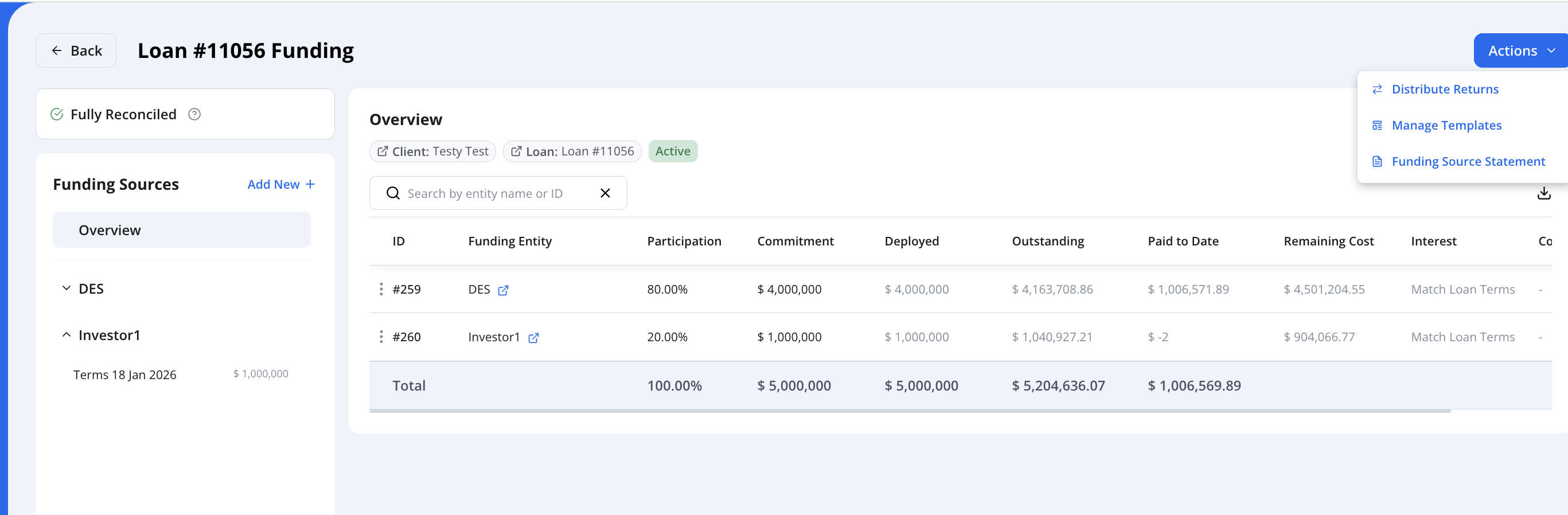
You can also download statements for individual funding sources as needed.
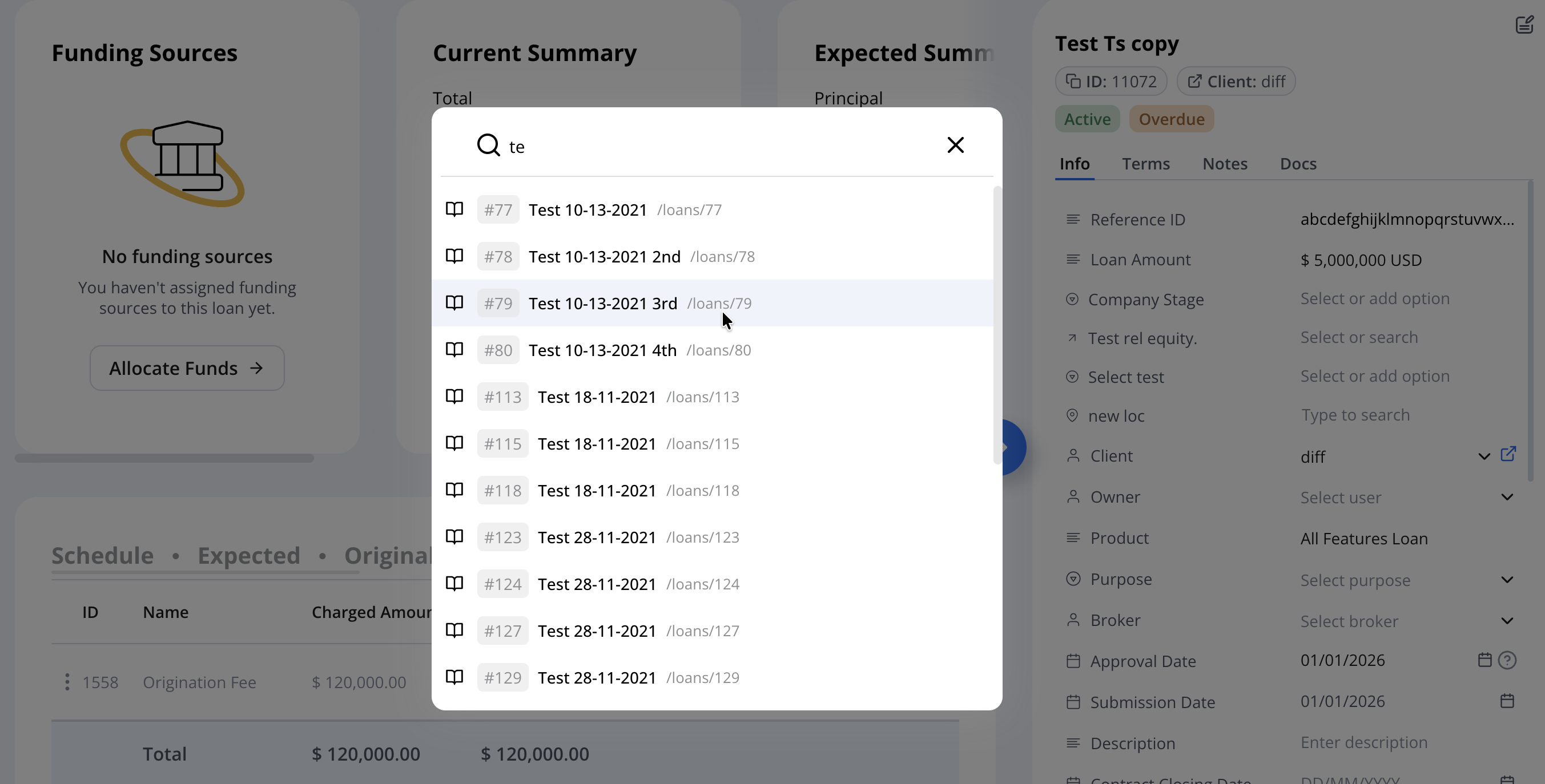
Expanded Search Options
Hypercore's search now returns up to 20 results instead of 10, providing broader coverage and increasing the likelihood of finding relevant information.
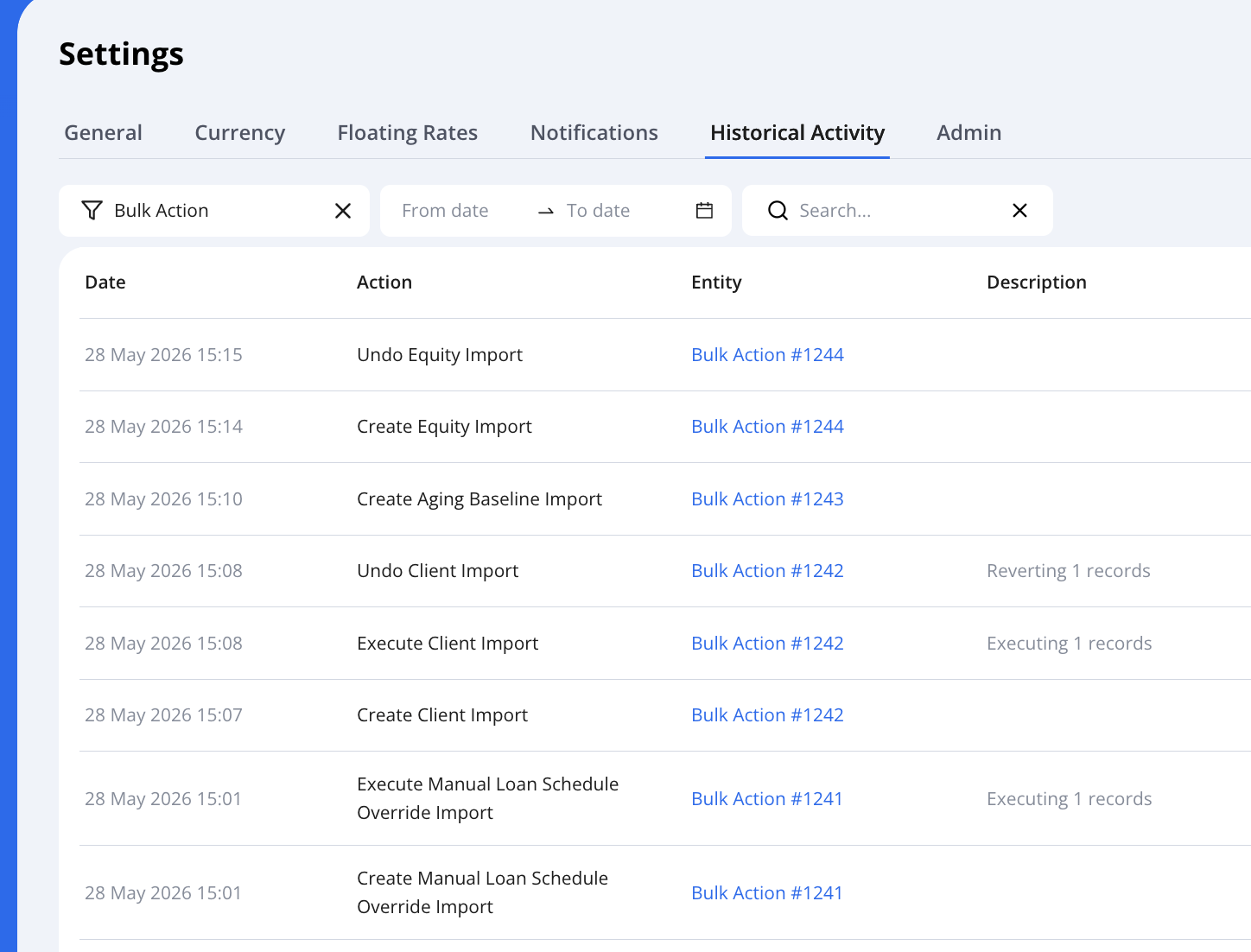
Improved Bulk Action Visibility
The Historical Activity section now includes more detailed descriptions for bulk actions, providing greater transparency into the specific changes made.
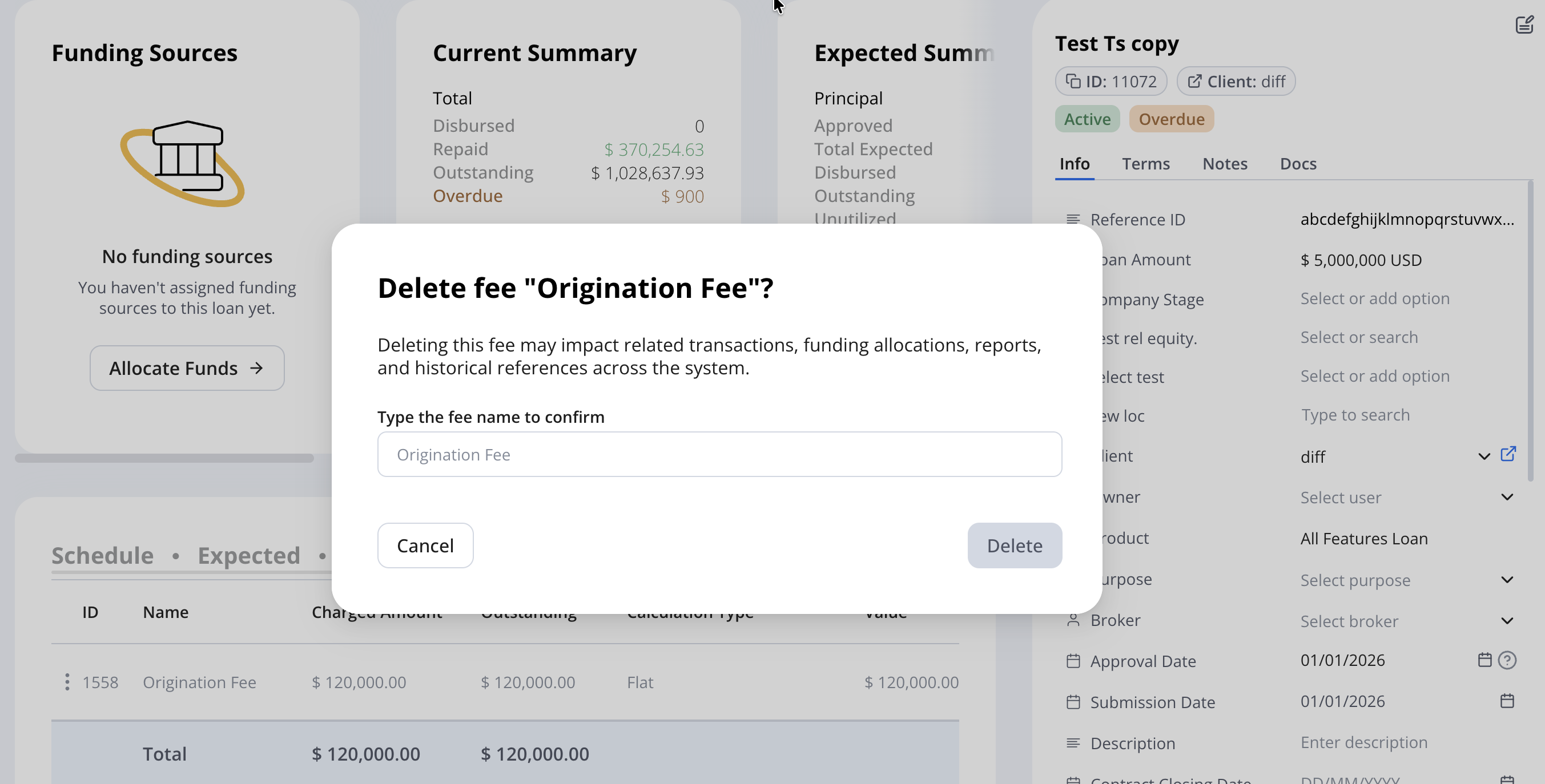
Added Confirmation for Fee, Deposit, and OID Component Deletion
To help prevent accidental changes, Hypercore now requires confirmation before deleting a Fee, Deposit, or OID Component.
Users must confirm both the deletion action and the specific Fee, Deposit, or OID Component being removed before the change is applied.
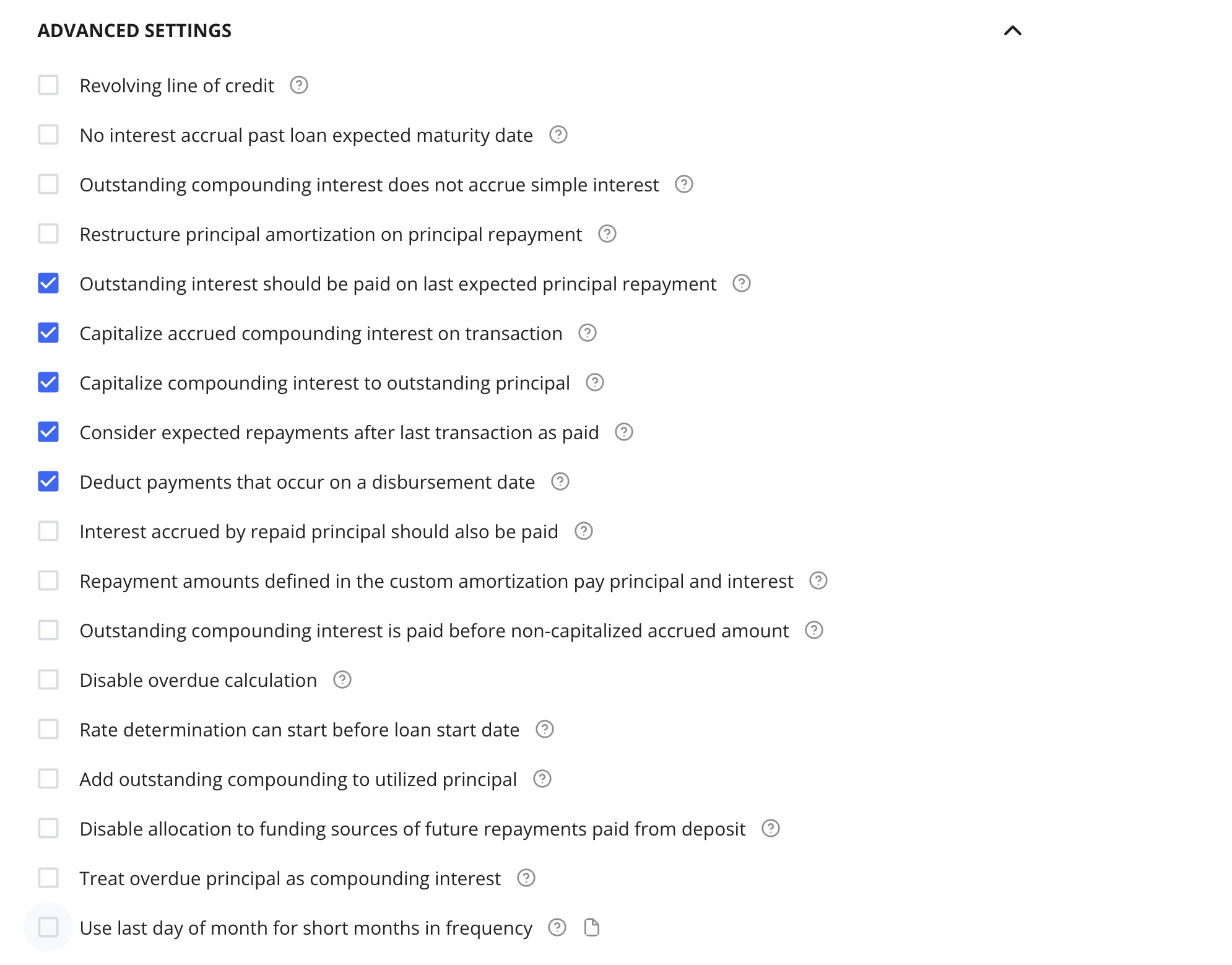
Advanced Loan Settings
Use Last Day of Month for Short Months in Frequency
When enabled, if the configured frequency day does not exist in a month, the system uses the last valid day of that month instead of rolling into the next month.
Impact: This affects the calculation of scheduled repayment dates for frequencies configured on days such as the 29th, 30th, or 31st.
Example:
Monthly on the 30th
- Default: March 1 (for February)
- Enabled: February 28 (or 29 in leap years)
Treat Overdue Principal as Compounding Interest
When enabled, unpaid expected principal payments are added to compounding interest overdue instead of principal overdue.
Impact: Affects how overdue amounts are classified and whether they are included in future compounding interest calculations.
Questions or thoughts? Let us know.